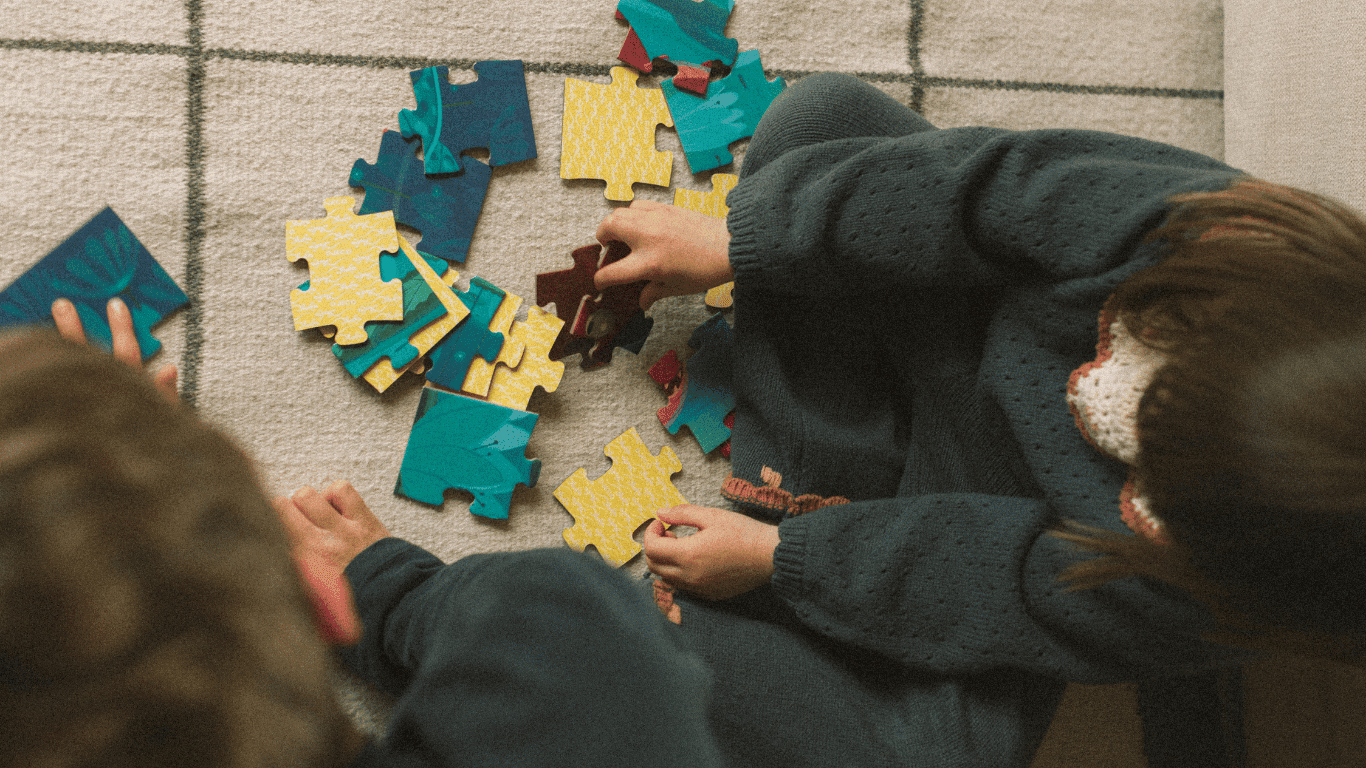
Mathilde (a fictitious name) has just finished her 4th year of elementary school. Her teacher congratulates her and wishes her a wonderful summer of freedom.
— Freedom? Mathilde wonders. On Monday, day camps start… summer is already taking shape.
This reality is shared by many children. Her summer will be punctuated by carefully chosen camps: horseback riding, soccer, theatre, video creation, watercolour. Stimulating, enriching activities, planned with love. Like so many other parents, hers want the best for her.
As soon as it was possible, Mathilde was enrolled in daycare. She learned to live in a group, follow a schedule, wait her turn, share, create, and perform gently. The days went by, punctuated by structured, organized, supervised activities.
And weekends? They don’t really break the tempo. Skiing lessons, swimming, tournaments, shows, special activities. Parents applaud, get emotional, reassure themselves. They do what they were taught to do: offer, stimulate, support.
Then come social media. Mathilde will see carefully selected images: smiling children, busy, surrounded, active. These contents never show the silences, the doubts, the comparisons, the fatigue. One click is enough to reinforce the idea that you always have to do more, be more, live more.
Mathilde doesn’t know boredom.
Neither does our society.
It doesn’t encourage it. It fears it.
And yet.
Boredom is an essential space. A place where the child tames time, solitude, and imagination. Where they develop their inner resources rather than constantly relying on external stimuli. A place where a deep calm, a free creativity, and a confidence that doesn’t depend on the gaze of others can emerge.
For you, parents, boredom is also a rare opportunity: to observe your child without orchestrating, to breathe in a hectic daily life, to slow down together. And above all, to prevent an increasingly present evil: anxiety.
Anxiety is gaining ground. Among young adults, adolescents, and now children. It settles in gently, fed by performance pressure, constant comparison, and the absence of empty spaces.
So, what to do?
Nothing.
Or almost.
Offer time.
Time without a goal.
Time to be bored.
It will be uncomfortable. Mathilde will complain, be "really" bored, seek stimulation. Hold on. Boredom is learned. It is crossed. And it becomes, with time, a powerful ally.
For 2026, at Parent 360, we wish you less filling… and more space.