Halloween Treats: How to Enjoy Without Guilt
Let’s be honest: Halloween is one of the most anticipated holidays for kids! Dressing up, going out with friends, and coming home with a bag full of treats… it doesn’t get much better than that! For parents, though, this impressive haul can raise a lot of questions. How many treats should you let your child eat? Should you limit the amount? Hide them? Let them eat as much as they want on Halloween night?
What if, instead of trying to control every treat consumed, we used this holiday to help our kids develop a healthy relationship with food?
1. Treats have their place too!
Sometimes we tend to categorize foods into two groups: “good” and “bad.” Fruits and vegetables on one side, treats and desserts on the other. Yet, this way of presenting food can influence the relationship our kids develop with what they eat. When we impose overly strict restrictions or use treats as rewards, we risk making them even more appealing. Some kids may then tend to eat large quantities when they have access, for fear of not being able to enjoy them later.
Of course, treats don’t have the same nutritional value as other foods in our diet. But not all foods need to have the same nutritional function to have a place on our plate. Some also contribute to the pleasure of eating! This food neutrality is built every day, not just at Halloween.
A good way to start? Surprise your child by offering a few treats with their snack or even with their meal, without any special occasion! This shows them that treats can have a place in their diet, without needing to be earned.
2. Halloween night: time for fun!
On Halloween night, kids often have only one thing on their mind: going out to collect treats! Between the excitement and the preparations, dinner can quickly become a source of negotiations. To simplify the evening, plan a meal your child particularly enjoys. You can even give it a little Halloween twist, without spending hours in the kitchen.
A few ideas:
- Monstrous macaroni: a few drops of food colouring are enough to turn pasta into orange, green, or purple macaroni.
- Ghost mini-pizzas: top small pizzas with mozzarella cut into ghost shapes.
The goal is simply to maintain your child’s eating habits by offering them a meal that will give them the energy they need to fully enjoy their evening.
What to do once the treat collection is over?
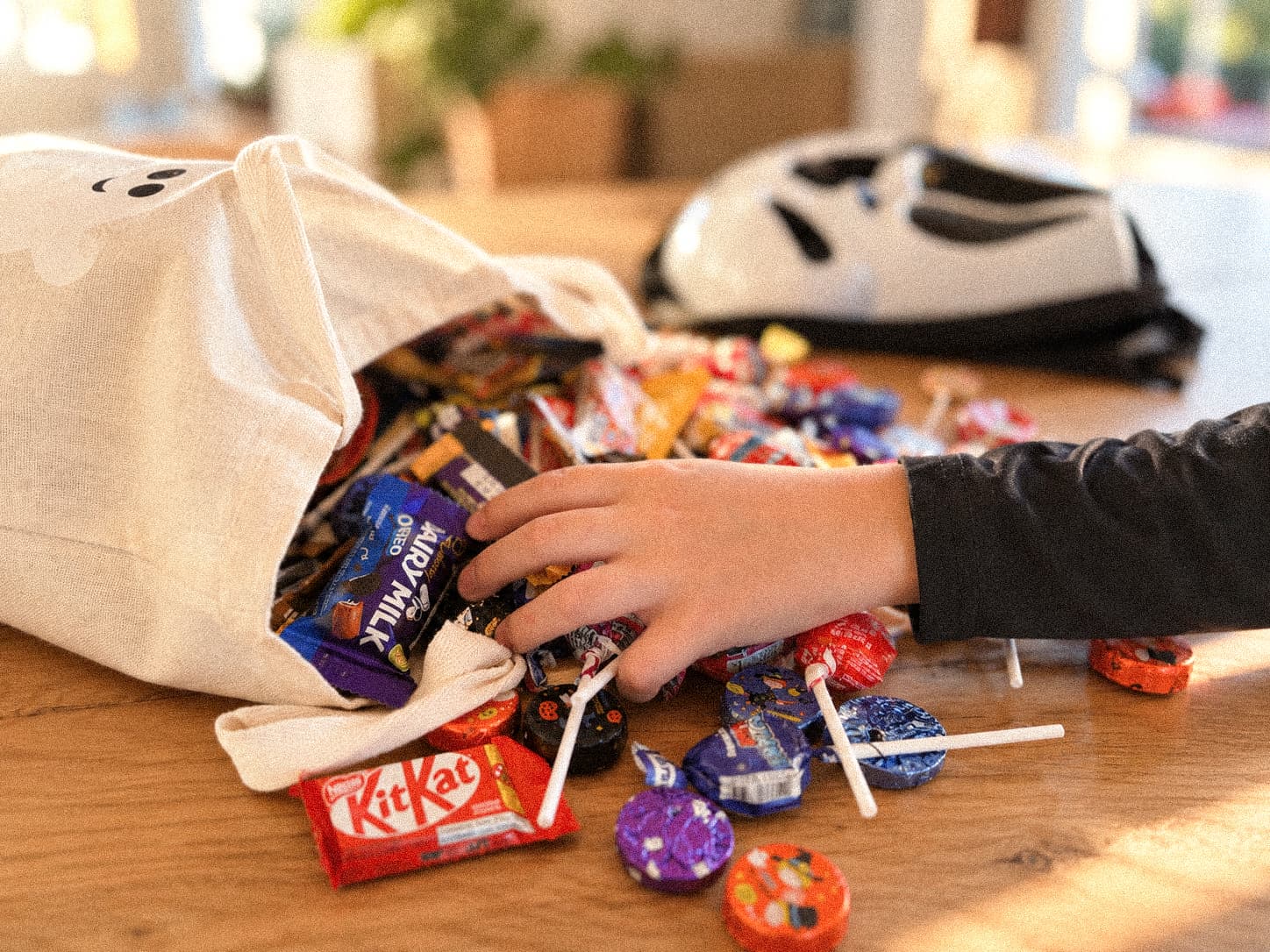
Before letting your child explore their treat bag, take a few minutes to sort through it together. Check the packaging, remove any that are open or damaged, and pay attention to food allergies. For younger kids, some hard or sticky treats can pose a choking hazard. If your child wears braces or another orthodontic appliance, also consider the recommendations for treats to avoid.
And what about a snack? After walking around the neighbourhood for much of the evening, it’s perfectly normal to be hungry! Don’t hesitate to offer a snack to the whole family to recharge after such an active evening. And of course, let the treats begin! Let your child explore their haul, try new varieties, and enjoy their favourites.
How many treats can your child eat?
Depending on your child’s age and maturity, you can let them decide how many treats they want to eat or guide them more in their decision. The important thing is to give them some autonomy while providing guidance tailored to their needs. For example, if the amount they ask for seems high, suggest they start with a smaller quantity and then see if they want more:
“You’d like to eat ten treats? I suggest starting with four or five, and then you can see if you still want more.” This approach gradually helps them recognize their feelings of hunger, fullness, and satisfaction. Remind them that their treats will still be there the next day and make sure to keep that promise! This can reduce the urge to eat everything right away. And if your child eats to the point of a stomachache, avoid reproachful comments like “I told you so!” When they’re feeling better, you can help them connect what they ate with their bodily sensations, without judgment or guilt.
3. What to do with all the treats after Halloween?
Once the party’s over, you still have to decide what to do with this impressive haul! Here are some ideas to do it without turning treats into a source of conflict:
- Keep their favourites!
Invite your child to identify the treats they like best. They don’t have to like or eat them all. The ones they’re less interested in can be traded, shared, or simply set aside. - Store the treats, without hiding them!
Some parents, depending on their children’s age, will be comfortable leaving the treats in plain sight and easily accessible for the first few days. Others will prefer to store them in a place known to the kids and bring them out at different times of the day, at a frequency that works for them.
The important thing is to choose an approach you’re comfortable with and that respects your family’s values and habits.
One thing to avoid, though: making the treats disappear in secret or throwing them away without talking to your child. This could undermine their trust and reinforce the idea that they need to eat their treats quickly before they vanish.
4. Learning to savour treats and recognize sensations
Beyond the quantity consumed, Halloween can also be an opportunity to help your child take the time to appreciate what they’re eating. Why not organize a little tasting session as a family? Take the time to explore the colours, textures, and flavours of different treats. Are they crunchy, chewy, sour, or very sweet? Which ones do you prefer and why?
This little experiment can help your child discover the pleasure of savouring food by taking their time. Remember, it’s perfectly normal to eat for pleasure, even when you’re no longer hungry. The important thing is to gradually help the child recognize and respect their feelings of hunger and fullness while allowing them to eat sometimes simply for pleasure. This ability to self-regulate develops over time and with experience. Some kids will need more guidance, depending on their age, maturity, and relationship with food.
5. Watch the messages you send about treats!
Our words and behaviours can influence how our kids perceive foods, especially those often associated with pleasure, like treats and desserts.
Here are some examples of better phrasing to use:
Instead of saying: “You’ve already eaten too much sugar!”
Try: “Do you still want treats or would you prefer to save some for tomorrow?”
Instead of saying: “Finish your vegetables if you want treats.”
Try: “We’ve also got treats on the menu tonight!”
Instead of saying: “You’ll get sick if you eat all that!”
Try: “Take the time to savour your treats and see how you feel.”
Instead of saying: “With all the treats you’ve eaten, we’ll have to go move a bit!”
Try: Avoid linking physical activity to the need to compensate for what you’ve eaten.
Kids also observe how we talk about our own eating. If we eat treats while saying we’ve “cheated” or that we’ll have to deprive ourselves the next day, we risk sending the message that certain foods should be associated with guilt. And why not simply enjoy our favourite treats too, as parents?
Halloween is so much more than sugar!
Halloween is, above all, a holiday filled with fun, traditions, and memories! Instead of worrying only about the amount of sugar consumed, let’s use this opportunity to support our kids, without pressure, in developing a healthy relationship with treats and, more broadly, with food. After all, it’s not one night of treats that defines our child’s eating habits, but the overall experiences and messages we share with them every day.
Happy Halloween! 🎃