


Swimmer's Ear: What Every Parent Should Know Before Diving into Summer
Summer is here! Your kids are diving into the water, whether it's a pool, a lake, or a splash pad. And a few days later: your child complains that their ear hurts. Welcome to swimmer's ear season! This type of infection is one of the most common reasons for medical visits in the summer, especially in children aged 5 to 15. The good news: with a little understanding and a few simple habits, it can often be prevented, and when it does occur, knowing what to do makes all the difference.
What exactly is swimmer's ear?
External otitis, to give it its proper name, is an infection of the external auditory canal. It's often called "swimmer's ear" because it commonly occurs after prolonged exposure to water.
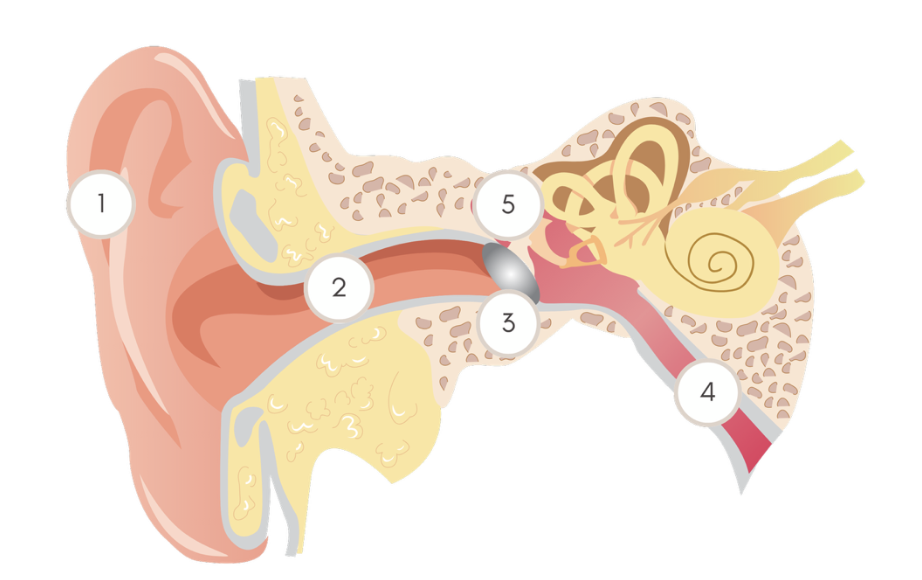
Here's what happens in the ear: water that enters the canal during swimming soaks the skin, raises the local pH, and removes the thin protective layer of earwax that normally lines the canal. This earwax, often considered dirt, plays an essential role: it protects the skin of the canal from moisture and bacteria. When it disappears, the skin becomes vulnerable, and bacteria, responsible for more than 90% of cases of external otitis, can settle in and cause an infection.
Children's external auditory canals are narrower than those of adults, which encourages water retention and moisture. Add to that the fact that children often spend several hours a day in the water during the summer and tend to be rough with their ears, and you'll understand why external otitis particularly affects this age group.
What are the main symptoms of external otitis?
External otitis is easily distinguished from middle ear infection (the one that affects the portion of the ear that is "behind" the eardrum, more common in young children, after a cold, in winter). The main difference: with swimmer's ear, the pain increases when you touch or pull on the ear.
Symptoms usually appear within 48 hours of swimming and most often present in just one ear at a time:
- Ear pain (otalgia), often intense, aggravated by manipulation of the pinna or pressure on the tragus (the small cartilage in front of the ear)
- Itching inside the canal (pruritus)
- Discharge from the ear (otorrhea)
- Feeling of a blocked ear, sometimes accompanied by a slight temporary hearing loss
If your child has a fever in addition to these symptoms, it could be something else, such as acute middle ear infection with a perforated eardrum. The absence of pain when the pinna is moved is an indication in favour of this hypothesis.
How to prevent external otitis in 3 simple steps?
Prevention is based above all on one principle: keep ears dry after swimming.
- Dry ears thoroughly after each swim
After getting out of the water, tilt your head to each side to let the water drain out naturally. You can gently dab the pinna with a corner of a towel, but never insert anything into the canal. - Avoid trauma to the auditory canal
My mentor used to say: never put anything in your ear smaller than your elbow. Anything that goes into the external auditory canal, such as fingers or cotton swabs (Q-tips), pushes the earwax further inside and, in addition, irritates the skin, creating the ideal conditions for an infection. So, avoid them! - Occlusive earplugs for repeat offenders
For children who suffer from recurrent external otitis, specially designed swimming plugs can reduce the frequency of episodes. However, be careful: ill-fitting plugs can themselves cause micro-trauma.
Bonus tip for repeat offenders
If your child suffers from recurrent external otitis, it may be helpful to talk to your doctor or pharmacist. Preventative solutions to apply after swimming exist, based on water, vinegar and/or alcohol, and a healthcare professional will be able to guide you towards the most appropriate option for your situation.
When and how to treat swimmer's ear?
If the symptoms are there, a medical consultation is required. External otitis is usually treated with antibiotic ear drops, often combined with an anti-inflammatory (e.g. Ciprodex). Oral antibiotics are not usually indicated for simple cases.
The doctor may also proceed with cleaning the auditory canal if necessary. If the canal is very swollen, it is sometimes necessary to insert a small wick (a kind of sponge) to allow the drops to penetrate effectively.
To properly administer the drops to your child:
- Warm the bottle in your hand for 1 to 2 minutes (cold drops can cause dizziness)
- Lay the child on their side, with the affected ear facing up
- Instil the prescribed number of drops (you can use an ear speculum)
- Make a slight forward and backward movement of the pinna, or gently press on the tragus (pump) to help the drops penetrate
- Maintain the position for 3 to 5 minutes. A timer or turning it into a game can help younger children stay still!
As the pain can be intense, don't hesitate to use over-the-counter painkillers such as acetaminophen (Tylenol) or ibuprofen (Advil) to relieve your child while waiting for or during treatment.
When to seek emergency care (or see an ENT specialist)?
Most cases of external otitis respond well to treatment within a few days (48 to 72 hours), but it's important to complete the treatment anyway. However, you should seek further advice quickly, and potentially be referred to an ENT specialist, if:
- Symptoms do not improve or worsen after 48 to 72 hours of treatment
- The pain is disproportionate or very intense
- A fever or neck glands appear
- There is visible redness or swelling around the ear
- Lesions resembling blisters (shingles) appear on the pinna
- Neurological signs appear: facial paralysis, dizziness, etc
These signs may indicate a complication, such as malignant external otitis (rare, but serious, occurs mainly in immunosuppressed or diabetic people), Ramsay Hunt syndrome (herpes zoster), or an infection spreading beyond the canal.
In summary
Swimmer's ear is common, painful, but quite treatable, and often preventable. The most important reflex to remember: dry ears after each swim, and never put anything bigger than an elbow in the ear. If symptoms appear despite this, consult quickly to get the right treatment and avoid complications.
Have a great summer… and happy swimming!
By Dr. Nadia Hagenimana, MD | ENT & Cervico-Facial Surgery
Dr. Nadia Hagenimana is an otorhinolaryngologist and cervico-facial surgeon. She practises at the Hôpital du Haut-Richelieu (CISSS de la Montérégie-Centre) and at the Clinique DIX30. Follow her on Instagram @drnhagenimana for educational ENT health content.

